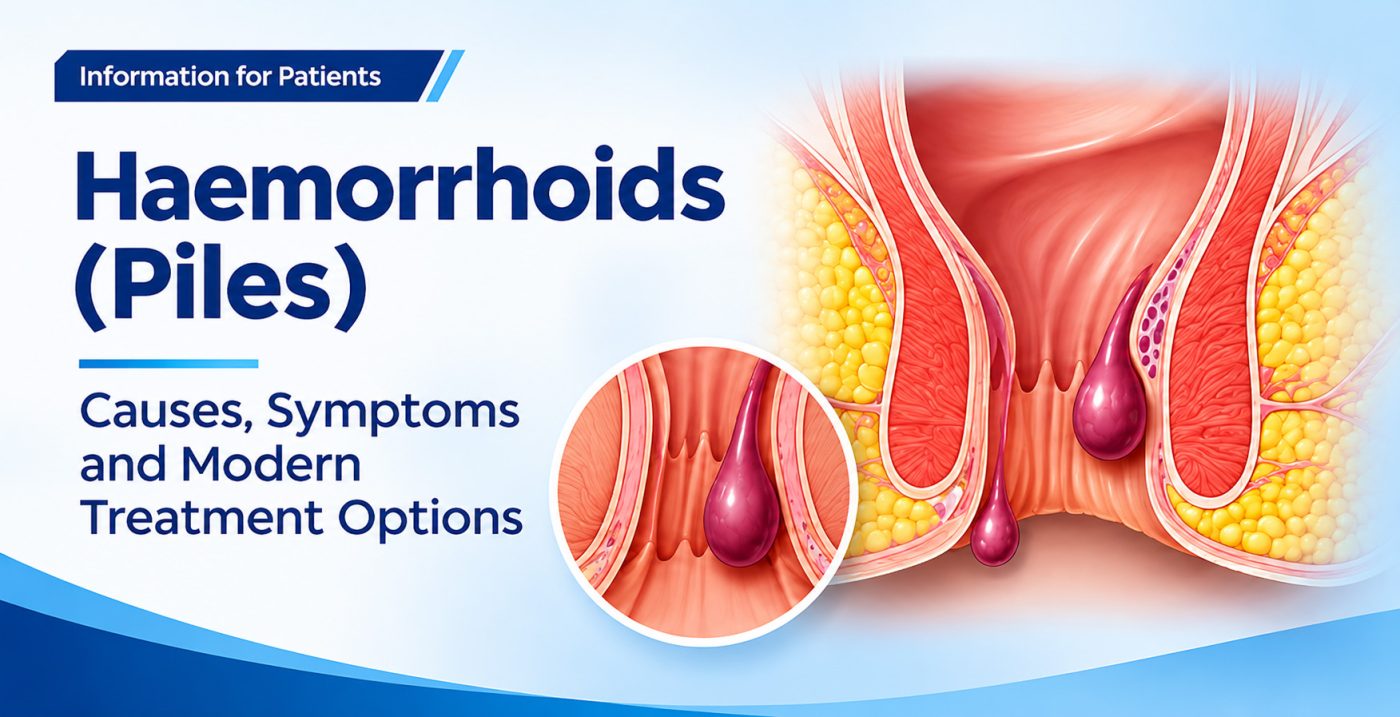
Haemorrhoids, commonly known as piles, are swollen blood vessels in and around the lower rectum and anus. They are a common condition that can cause discomfort, irritation and bleeding during bowel movements. Although many people feel uncomfortable discussing this problem, haemorrhoids are treatable, and appropriate medical advice can help improve symptoms and quality of life.
What Causes Haemorrhoids?
Several factors can contribute to the development of haemorrhoids, including:
- Chronic constipation and straining during bowel movements.
- Prolonged sitting, particularly on the toilet.
- A low-fibre diet.
- Pregnancy and increased pressure in the pelvic region.
- Repeated episodes of diarrhoea.
- Increased pressure on the blood vessels around the rectum.
Common Symptoms of Piles
The symptoms may vary depending on the type and severity of haemorrhoids. Common signs include:
- Bright red blood during or after bowel movements.
- Itching or irritation around the anus.
- Pain or discomfort, particularly with external haemorrhoids.
- Swelling or lumps around the anal opening.
- Discomfort while sitting.
Rectal bleeding should never automatically be assumed to be caused by piles. A proper medical examination is important to rule out other possible conditions.
Treatment Options for Haemorrhoids
Treatment depends on the severity of the condition. Mild cases may improve with dietary changes, increased fibre intake, adequate hydration and appropriate medication.
For persistent or more advanced haemorrhoids, specialist procedures or surgical treatment may be recommended. The appropriate approach depends on individual assessment and the patient’s condition.
When Should You Consult a Surgeon?
If you experience persistent rectal bleeding, severe pain, recurring swelling or changes in bowel habits, you should seek medical advice. Early assessment can help identify the problem and prevent unnecessary discomfort.
Expert Colorectal Care
Dr. Farhan Shahzad provides specialist assessment and surgical management of colorectal conditions. With international training and experience in general and colorectal surgery, he offers an individualised approach to diagnosis and treatment.
